Canyoning vs Coasteering in Madeira: Which Adventure Sport Is Right for You?
We earn a commission when you book through our links on Viator (PID P00303273), at no extra cost to you.
I've stood at the top of a 15m waterfall, harness clipped, water rushing past my feet, thinking: this is either the smartest decision of my trip or the worst. Madeira's canyoning routes, from beginner-friendly Ribeira das Cales to advanced Ribeiro Frio, offer an adrenaline-to-scenery ratio that's off the charts. And the island's coasteering, scrambling along volcanic cliffs and jumping into Atlantic pools, is a different kind of thrill entirely.
Madeira's volcanic terrain creates two high-quality adventure playgrounds: canyoning, abseiling down waterfalls through narrow gorges, and coasteering, scrambling, swimming, and cliff jumping along the rocky coastline. Both get your heart racing. But they are completely different experiences. I recommend booking a canyoning adventure for the most rewarding experience.
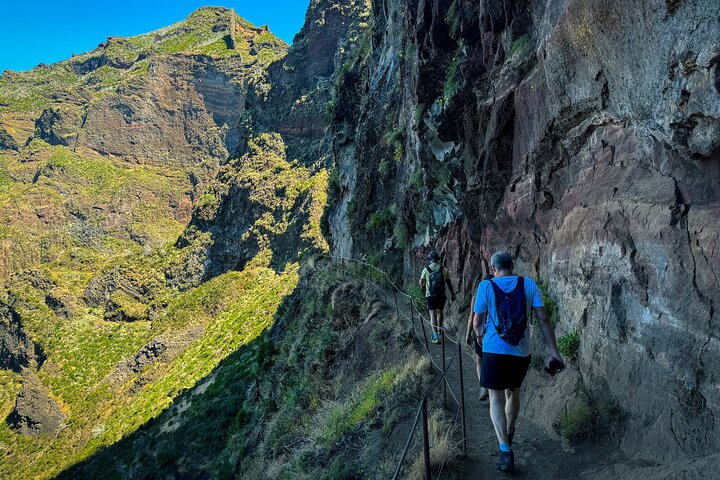
If you want Madeira's highest-rated outdoor activity (4.99★ from 1,139 reviews), choose canyoning, abseiling down waterfalls in the island's volcanic gorges is an experience you cannot get anywhere else in Europe at this quality-to-price ratio (€71). Coasteering (€76) is the better choice if you prefer sea-level adventure, jumping from cliffs into the Atlantic, swimming through sea caves, and scrambling over volcanic rock along the coast. Can't decide? Do both, they are completely different and equally remarkable.
Local Wisdom, Why I Choose Canyoning Every Time
🇵🇹 Before You Hike (2026 Update)
SIMplifica booking is now mandatory for all classified PR trails in Madeira. You must book online before arrival and show a QR code at the trail entry.
- Standard trails: €4.50 per person
- PR1 (Pico do Arieiro → Pico Ruivo): €10.50 per person (from April 2026)
- Book at: simplifica.madeira.gov.pt
Check trail status before you go: IFCN official trail status · IPMA weather
📌 PR1 spent part of early 2026 partially closed for rockfall repairs. It has since reopened. Always verify current status with IFCN, conditions change. Guided tours that include your trail fee are a convenient option, see recommended tours below ↓
I have done both. Coasteering is fun, scrambling along the coastline, jumping into the Atlantic, swimming through sea caves. On a hot August day, it is a perfect way to cool down. But canyoning is something else entirely. The first time I abseiled through a waterfall in Ribeiro Frio, water pounding my helmet, feet slipping on wet basalt, I understood why Madeira is considered one of Europe top canyoning destinations. The island volcanic geology, deep river canyons, vertical waterfalls, sculpted rock pools, was made for this sport. Coasteering you can do anywhere with cliffs and ocean. Canyoning in Madeira laurel forest canyons is distinctive to this island. If you can only do one, do canyoning. If you are scared of heights, coasteering is the right call, the jumps are optional and there is no abseiling.
Head-to-Head Comparison.
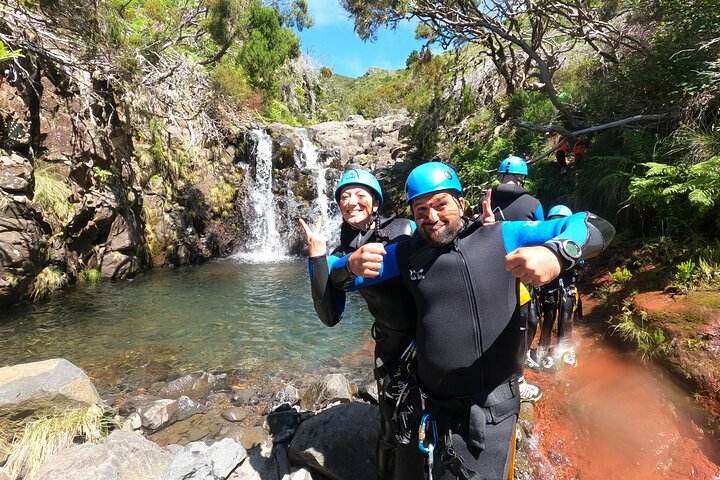
Canyoning, Level 1
Madeira's volcanic canyons are among Europe's finest for this sport. You will abseil down waterfalls (up to 15m on Level 1), slide down natural water chutes, and swim through crystal-clear pools in narrow gorges surrounded by lush vegetation. All equipment provided, wetsuit, helmet, harness. No prior experience required for Level 1.
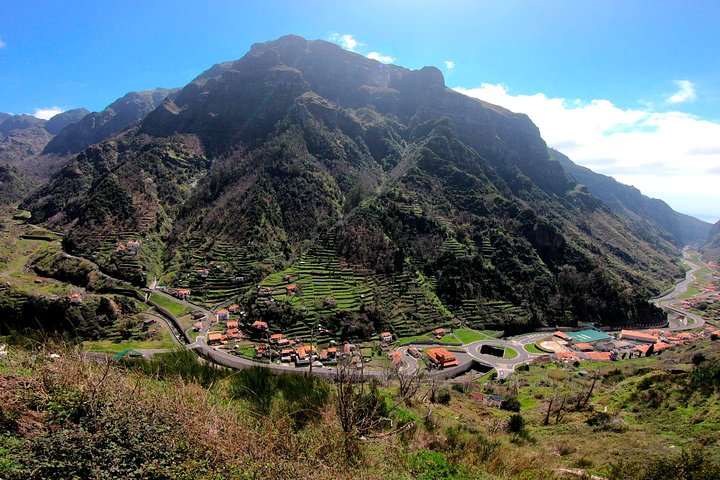
For official trail conditions and travel information, visit Visit Madeira, the UNESCO Laurissilva Forest page, and IFCN (Madeira's Institute of Forests and Nature Conservation).
Book Now →Coasteering, Cliff Jumping & Scrambling
Coasteering is a coastal adventure: you scramble along Madeira's volcanic shoreline, jump from cliffs into deep Atlantic waters (heights from 2m to 10m+, you choose your comfort level), swim into sea caves, and navigate rock pools. Wetsuits, helmets, and buoyancy aids provided. The 4-hour tour includes hotel pickup and is led by qualified coasteering guides who know every rock and current. Less well-known than canyoning but equally thrilling.
We earn a commission when you book through our links on Viator, at no extra cost to you. This is how we keep the site free.
Canyoning or Coasteering: Which Fits Your Adventure Style?
The question I get most often is whether to try canyoning or coasteering. Both involve wetsuits, helmets, and jumping into water, but they are different experiences. Canyoning takes place in steep mountain ravines where you descend waterfalls with ropes, it's a vertical sport that rewards patience and trust in your equipment. Coasteering follows the coastline at sea level, where you scramble over rocks, swim through sea caves, and jump off cliffs into the ocean, it's horizontal, faster-paced, and driven by momentum rather than precision.
I've done both on separate trips and they attract different personalities. Canyoning felt more like an achievement: standing at the top of a 30-metre waterfall, checking my harness, and leaning backward into the descent while water poured over my shoulders required a mental commitment I didn't expect. The moment I reached the bottom pool, there was a genuine rush of relief and pride. Coasteering, by contrast, felt like being a child again: scrambling over sun-warmed basalt, peering into sea caves, and jumping into turquoise water with nothing but gravity and nerve.
The coasteering tour near São Vicente includes jumps from 1 to 8 metres, the guide lets you choose your level. The canyoning tour starts with a practice rappel on dry ground before the real waterfalls. Both provide all equipment including wetsuits, helmets, and life jackets.
Skip if: You have any fear of confined spaces, canyoning involves narrow gorges. Coasteering requires climbing over slippery rocks, so limited mobility or bad knees are genuine limitations. Neither is suitable for non-swimmers or anyone uncomfortable in open water for extended periods.
What to Bring, Canyoning vs Coasteering
Canyoning: Swimsuit, towel, old trainers (they will get soaked). All technical gear provided. Coasteering: Swimsuit, towel, water shoes with grip (wet rocks are slippery). Wetsuit and helmet provided. Both: Sunscreen (UV reflects off water and rock). A change of warm clothes for after, you will be cold once the adrenaline wears off. GoPro if you have one: Both sports produce remarkable footage.
Which One Should You Choose?
Choose Canyoning If...
- You want Madeira's single highest-rated activity (4.99★)
- You are comfortable with heights and water
- You want a distinctive inland adventure in lush gorges
- You prefer abseiling to free-falling
- You want the most "distinctively Madeira" experience
Choose Coasteering If...
- You love cliff jumping and the ocean
- You prefer sea-level adventure to heights
- You want to explore sea caves and coastal rock formations
- You have already done canyoning elsewhere
- You want a less crowded experience (fewer people know about it)
⛔ Important Things to Know
- Both require basic swimming ability: You will be in the water. You don't need to be an Olympic swimmer but you must be comfortable in water.
- Canyoning is NOT for severe vertigo: Abseiling down a 15m waterfall with water rushing past you requires comfort with heights.
- Coasteering is weather-dependent: Rough seas can cancel trips. Have a backup plan.
- Minimum age: Canyoning Level 1 typically accepts 10–12+, coasteering usually 12+. Check with operators.
- Not during storms: Canyoning in heavy rain is dangerous (flash floods). Operators cancel if conditions are unsafe.
Do I need experience for either?
No. Level 1 canyoning and introductory coasteering are both designed for complete beginners. Guides provide full instruction and you progress at your own pace. For canyoning, Level 1 uses waterfalls up to 15m, manageable for first-timers. For coasteering, you choose your jump heights.
Which one is harder on the body?
This surprised me: canyoning left my shoulders sore from holding the abseil rope, while coasteering bruised my knees from scrambling over basalt. I did both on consecutive days and regretted not taking a rest day in between. For canyoning, you need decent upper body strength to control your descent, especially on the higher waterfalls. For coasteering, you'll be climbing over sharp volcanic rocks, I scraped my shin on an exposed edge during my first jump and it bled for the rest of the tour. The guide patched me up with a first-aid kit, but I wished I'd worn neoprene socks under my water shoes. If you have weak knees or joints, canyoning is gentler because the abseiling is controlled. If you're prone to sea-sickness or vertigo, coasteering is the safer bet since you stay at sea level.
What should I wear?
Both provide wetsuits, helmets, and harnesses. Bring a swimsuit to wear underneath, a towel, and shoes that can get wet (old trainers or water shoes, not flip-flops). For canyoning, bring a change of clothes for afterwards.
Which One Will You Remember Longer?
I asked myself this after doing both on the same trip. A month later, which memory was stronger? The answer surprised me: canyoning. The coasteering was fun, I still remember the shock of the first cliff jump into cold Atlantic water, but the canyoning experience stuck with me. Standing at the top of a 15m waterfall, rope in hand, water rushing past my ankles, choosing to lean backward into the descent. That required a different kind of courage. The roar of the waterfall in my ears, the spray on my face, the moment of weightlessness as I dropped the first metre. My hands were shaking when I hit the pool. Not from fear. From adrenaline. Coasteering felt like play. Canyoning felt like an achievement.
Skip both if: You're not comfortable in water for extended periods, you have any condition that makes cold water dangerous, or you're on a tight budget (€71-83 per person adds up for a family). If you only have budget for one, do canyoning, it's more distinctive to Madeira. If you're scared of heights but want an adrenaline rush, do coasteering, the jumps are optional and there's no abseiling.
Last updated: May 28, 2026. All activities are weather-dependent, operators will cancel and refund if conditions are unsafe.