For official trail conditions and travel information, visit Visit Madeira, the UNESCO Laurissilva Forest page, and ICNF, Portuguese Nature Conservation Institute.
We earn a commission when you book through our links on Viator (PID P00303273), at no extra cost to you.
We earn a commission when you book through our links on Viator, at no extra cost to you. This is how we keep the site free.
I learned the hard way that Madeira trail planning isn't like mainland hiking. There's no Uber to the trailhead. Buses don't serve most levada start points. And the taxi drivers in Santana might not speak English. Book your transfers in advance. The sunrise transfer for PR1 is the single most worthwhile logistics purchase on the island, they pick you up at your hotel at 6 AM, drop you at the summit, and collect you at the far end so you don't have to hike back up 800m of stairs. Self-driving means either a brutal out-and-back or a very expensive taxi from Achada do Teixeira. Spend the €35 You'll thank me at the summit.
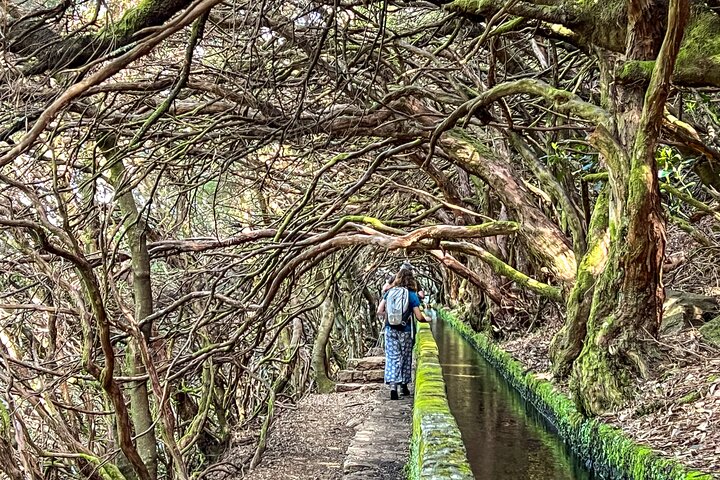
After walking 400+ km of Madeira trails, I've learned that planning is everything on this island. Madeira is small (55km long, 22km wide) but its terrain is vertical, the central massif rises to 1,861m within 15km of the coast. Weather changes dramatically by elevation. Trail closures happen without warning. And your choice of accommodation determines whether you're 25 minutes or 60 minutes from the trailhead. I recommend booking a self-guided 25 Fontes transfer for the most rewarding experience.
Three key decisions:
1. Where to stay: Funchal (first-timers, no car needed, most tour pickups), Santana (serious hikers, car essential, 25 min to PR1.2, 30 min to PR9/PR10/PR11), Calheta (sun-seekers, whale watchers, Madeira's sunniest corner, often clear when Funchal is cloudy). Not for: ≤4 day trips. If you only have 4 days, don't split your stay, you waste half a day moving between bases.
2. When to visit: May, June, and September are prime, every trail in peak condition, moderate crowds. July-August is peak crowds and peak prices, parking at 25 Fontes fills by 8 AM. November-February is rainy but affordable. The one mistake people make: assuming Funchal weather = trailhead weather. Microclimates are real, it can be sunny in Funchal and pouring rain 30 minutes north on the same day.
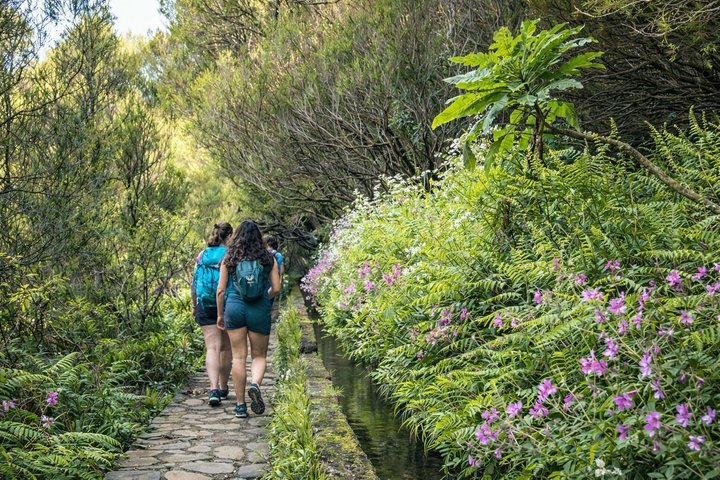
3. How to get around: Rent a car (€28-60/day, manual 1.2L+ essential) for maximum flexibility. Europcar and Guerin are fine with mountain roads; Goldcar and Sixt forbid them. Don't rent a Fiat 500, the PR1 access road has 40+ hairpin turns with 20% gradients. And don't assume GPS works in Madeira's 150+ tunnels, download offline maps before you leave your accommodation. Call 291 211 800 (English option 2) for the daily update after 7:30 AM.
Practical logistics make or break a Madeira hiking trip. From where to base yourself to what weather to expect each month, these guides answer the questions travellers actually ask before booking.
Local Wisdom, The Booking Mistake I See Most Often
🇵🇹 Before You Hike (2026 Update)
SIMplifica booking is now mandatory for all classified PR trails in Madeira. You must book online before arrival and show a QR code at the trail entry.
- Standard trails: €4.50 per person
- PR1 (Pico do Arieiro → Pico Ruivo): €10.50 per person (from April 2026)
- Book at: simplifica.madeira.gov.pt
Check trail status before you go: IFCN official trail status · IPMA weather
📌 PR1 spent part of early 2026 partially closed for rockfall repairs. It has since reopened. Always verify current status with IFCN — conditions change. Guided tours that include your trail fee are a convenient option — see recommended tours below ↓
I was at the Queimadas forestry house last September, waiting to start PR9 to Caldeirão Verde. A Dutch couple arrived at 10:30 AM, walked up to the trailhead, and realized the car park was completely full, 40+ cars, tour vans unloading, queue forming at the narrow trail entrance. They had driven 45 minutes from Funchal assuming a Tuesday morning would be quiet. It was not. The PR9 trail narrows to a single-file ledge within the first kilometre, and when 200 people are on it, the walk becomes a slow procession rather than a hike. Here is what I tell everyone: the most popular levadas, PR9, PR10, 25 Fontes, are morning experiences or nothing. Arrive before 8:30 AM or after 3:00 PM. Between 10 AM and 2 PM, you are walking in a crowd. And if you are booking a guided tour, ask what time the van departs, the operators who leave at 8:00 AM get you to the trailhead before the rush. The ones leaving at 9:30 AM deliver you straight into it.
Local Wisdom, The Three Things I Wish I Had Known
I arrived on Madeira with a backpack and a notebook. Three things still caught me off guard: First: Madeira weather changes faster than anywhere I have hiked. A clear morning at sea level means nothing at 1,500m. Always check the mountain forecast. Second: The tourist infrastructure is excellent, but concentrated in Funchal. Outside the capital, you need a plan. Buses are hourly at top and do not serve most trailheads. Either book transfers or rent a car. Third: Portuguese is essential outside Funchal. Levada keepers, café owners in mountain villages, and taxi drivers in Santana may not speak English. Learn "bom dia," "obrigada," and "onde fica a levada?" It goes a long way.
What You Need to Know Before Booking a Madeira Tour
Madeira's tourism infrastructure is excellent but there are a few things that catch first-time visitors off guard. First: the weather on the south coast (Funchal) can be completely different from the north coast (São Vicente) on the same day. I've left Funchal in 25°C sunshine and driven 40 minutes to Ribeira Brava where the temperature dropped to 16°C with drizzle. The mountains create their own microclimates, Paul da Serra can be 10°C colder than the coast with 50km/h winds while the coast is calm. Always carry a waterproof jacket and a warm layer, even in August.
What to Pack for Madeira, The Essentials
Layers: The temperature difference between Funchal and Pico Ruivo summit can be 15°C. Pack for three seasons in one day. Waterproof jacket: Non-negotiable. Hiking boots: Not trainers. Not sandals. Madeira trails are steep and slippery. Headlamp: Essential for tunnels (levadas) and sunrise hikes. Sunscreen and hat: UV at elevation is intense. Reusable water bottle: Tap water is safe and excellent. Cash: €50-100. Mountain cafés and poncha bars are cash-only.
What I Actually Keep in My Daypack
After three years of hiking Madeira, my pack has simplified. Here is what survives the cull: A plastic poncho from a €2 shop in Funchal, not for me, for my phone. I wrap my phone in it inside my bag. Madeira rain is horizontal on the summits, and "waterproof" bags eventually soak through at the seams. The €2 plastic never fails. A second pair of socks in a ziplock bag. Changing into dry socks at the halfway point is one of life's underrated pleasures. Levada walks mean wet feet, the channels overflow, the mist condenses, the tunnels drip. Dry socks at the turnaround point restore morale. A small packet of salt. I learned this from a Spanish trail runner on PR1. A pinch of salt in your water bottle replaces what you sweat out on the staircase sections. It prevents the calf cramps that hit around the 4km mark. Offline maps downloaded, not just saved. Google Maps works on Madeira roads but fails completely inside the 150+ tunnels. Download the Maps.me or Organic Maps tile for the island before you leave your accommodation. I have watched people drive in circles in Santana because their navigation cut out mid-tunnel.
Madeira's tourism infrastructure is excellent but there are a few things that catch first-time visitors off guard. First: the weather on the south coast (Funchal) can be completely different from the north coast (São Vicente) on the same day. I've left Funchal in 25°C sunshine and driven 40 minutes to Ribeira Brava where the temperature dropped to 16°C with drizzle. The mountains create their own microclimates, Paul da Serra can be 10°C colder than the coast with 50km/h winds while the coast is calm. Always carry a waterproof jacket and a warm layer, even in August.
Second: the driving is more challenging than most visitors expect. Many rental car companies offer manual transmission only, the roads are narrow and winding, and parking in Funchal is expensive and scarce. If you're not confident driving mountain roads, guided tours that include hotel pickup are significantly less stressful and often budget-friendlier than renting a car once you factor in fuel, insurance, and parking fees. The airport transfers page has specific pricing comparisons.
Third: book popular tours at least 48 hours in advance during summer. The PR1 Sunrise Transfer and the West Tour Waterfalls consistently sell out July through September. I've met travellers at the airport who assumed they could book a levada walk the night before and found all good options sold out for their entire stay. Madeira receives 1.5 million visitors annually (2025 data) and the most experienced guides operate limited groups for quality reasons, a smaller group size means more personal attention and better wildlife spotting on boat tours.
Skip if: You prefer to plan everything on arrival with complete flexibility. Madeira is small enough that last-minute arrangements work for accommodation, but the top-rated tour operators book out. If you value spontaneity over choice, you'll still find options, just not the top-rated ones.
Madeira Dolphin and Whale Watching on a Ecological Catamaran
2165 reviews · 4.56★ avg · from €40/person
Top-rated experience in the area. Great reviews, excellent value.
Check Availability →Canyoning in Madeira Island- Level 1
1151 reviews · 4.99★ avg · from €74/person
Top-rated experience in the area. Great reviews, excellent value.
Check Availability →Explore More
Related comparisons and guides: