Madeira Hiking for Beginners: 7 Easy Levada Walks That Don't Require a Guide
I Remember My First Hiking Experience, Here's What I Wish I'd Known
🇵🇹 Before You Hike (2026 Update)
SIMplifica booking is now mandatory for all classified PR trails in Madeira. You must book online before arrival and show a QR code at the trail entry.
- Standard trails: €4.50 per person
- PR1 (Pico do Arieiro → Pico Ruivo): €10.50 per person (from April 2026)
- Book at: simplifica.madeira.gov.pt
Check trail status before you go: IFCN official trail status · IPMA weather
📌 PR1 spent part of early 2026 partially closed for rockfall repairs. It has since reopened. Always verify current status with IFCN, conditions change. Guided tours that include your trail fee are a convenient option, see recommended tours below ↓
We earn a commission when you book through our links on Viator (PID P00303273), at no extra cost to you.
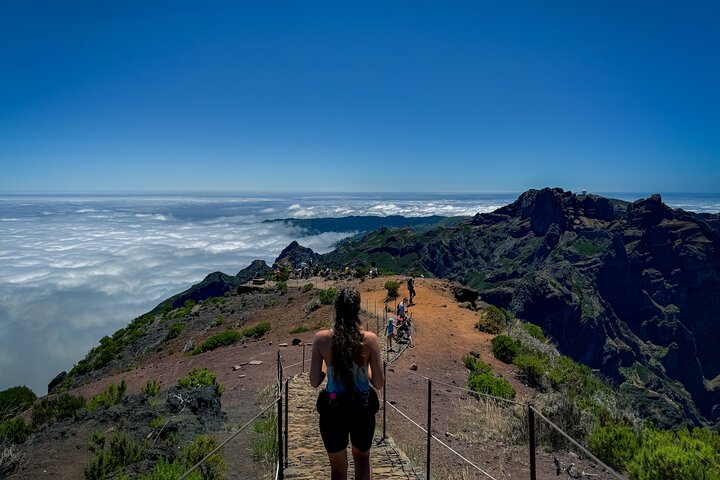
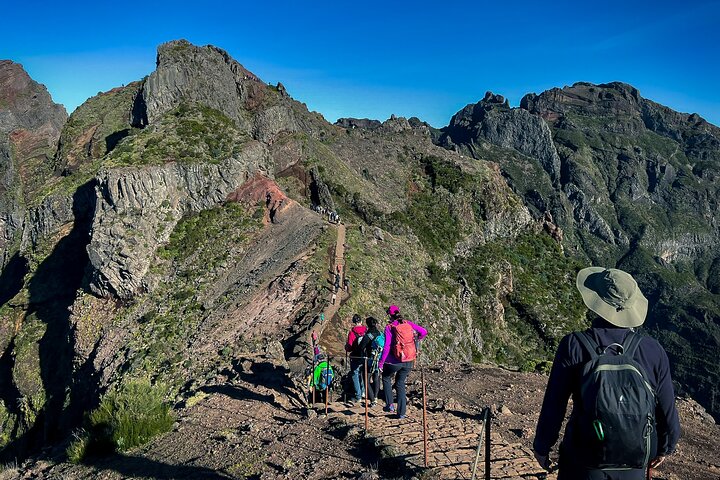
I started PR1 on a cloudless morning in April, t-shirt weather at the Arieiro carpark, sunglasses on, feeling smug about my timing. By the time I reached the tunnel at the 2km mark, the temperature had dropped 12°C and I was walking through freezing fog so dense I couldn't see the next trail marker. The microclimate shift happens at the ridge between Arieiro and Ruivo, the north coast weather spills over like a lid coming off a pot. I finished the hike shivering in a thin rain jacket I'd almost left in the car. Now I carry a proper thermal layer on PR1 every single time, even when Funchal is 28°C.
That day taught me the first rule of Madeira hiking for beginners: the island has more microclimates than a weather app can track. You can start a walk in sunshine and end in sideways rain 20 minutes later. But here's the good news, you don't need to be an elite athlete to enjoy it. Madeira's levada walks are some of the most accessible hiking on earth, if you pick the right ones.
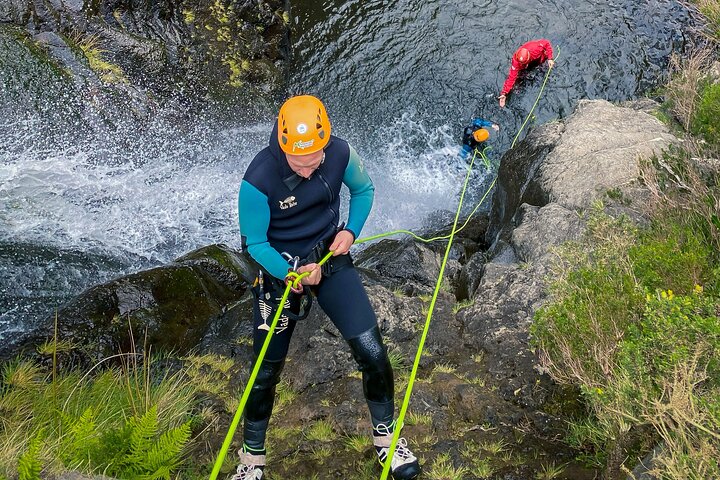
Levada Walk Madeira, Perfect for First-Timers
A levada walk is exactly what it sounds like: a path that follows one of Madeira's ancient irrigation channels. These channels were carved into the mountainsides by hand starting in the 15th century, and the paths alongside them are flat, well-maintained, and often surrounded by laurel forest. The easiest of them all is Levada dos Balcões (PR11). It's 1.5km each way, with only ~30m of elevation gain. No vertigo, guardrails at the viewpoint, and the famous friendly chaffinches will eat from your hand. The trailhead is at the trout hatchery in Ribeiro Frio, coordinates: 32°43'56.0"N 16°52'33.7"W. Parking holds about 30 cars, free, but it fills by 9 AM on weekends.
Balcões is the levada walk Madeira beginners should start with. It's flat, short, and ends at a balcony overlooking Pico do Arieiro and Pico Ruivo. I've seen families with toddlers, retirees in sandals, and people in jeans make it to the end without breaking a sweat. The path is paved for the first kilometer, then turns to compacted gravel, still easy, but watch for mud after rain. There are no toilet facilities at the trailhead, so plan ahead.
If you want a slightly longer option that still feels gentle, Levada do Alecrim is my go-to. It starts from the same Rabaçal forestry house as the famous 25 Fontes (PR6), but it's shorter (2.5km each way), flatter, and way less crowded. The waterfall at the end, Cascata do Alecrim, is a single, powerful cascade that drops into a pool surrounded by ferns. On a busy day, I've counted 20 people at Alecrim versus 200 at 25 Fontes. The trade-off? You don't get the 25 separate cascades, but you get solitude and a path that's genuinely easy. The Rabaçal parking (32°45'29.6"N 17°06'35.0"W) fills by 9 AM, so take the shuttle from the upper lot, €2.50 each way, cash only, runs every 15 minutes in summer.
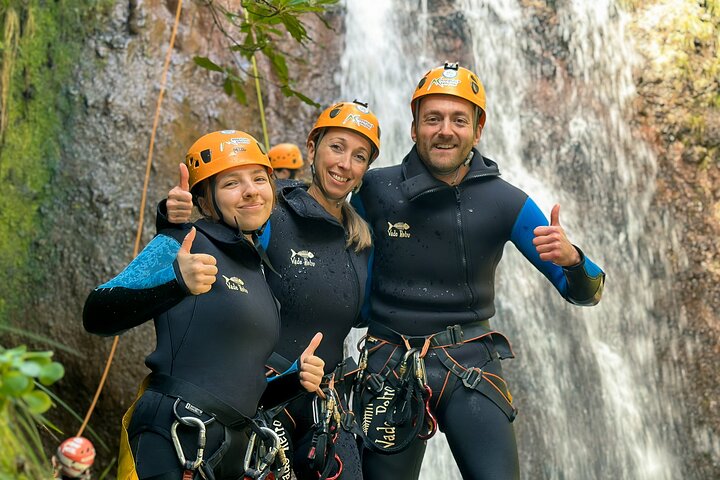
Who it's NOT for: Anyone who wants a challenge. These are nature walks with impressive endings, not endurance tests. If you're a trail runner or looking for a workout, skip to our PR1 vs PR1.2 comparison.
Finding Your Feet: Where to Start in Madeira
When I first moved to Madeira, I made the mistake of thinking I needed to conquer the mountains immediately. I drove straight to Pico do Arieiro, parked in the lot (which holds ~60 cars, free), and stared at the staircase section of PR1 thinking, "What have I gotten myself into?" you don't need to start at the top. Madeira hiking for beginners means starting at sea level and working up.
My advice? Spend your first day doing the Funchal City Walking Tour. It sounds like a cop-out, but it's not. The old town (Zona Velha) has the famous painted doors on Rua de Santa Maria, 200+ doors turned into street art by local artists. The Mercado dos Lavradores (farmer's market) is a sensory overload of exotic fruit, fresh fish, and the top poncha you'll find outside Câmara de Lobos. The Sé Cathedral is worth a quick look. The whole walk takes about 2-3 hours, covers maybe 3km, and gets your legs used to the island's slopes, because Funchal is built on a hill, and you'll feel it. I booked the Funchal City Walking Tour on my first day and the guide pointed me to a tiny tasca in the old town that served the top espetada (beef skewers) I've had on the island. It's not a hike, but it's the top orientation you'll get.
Who it's NOT for: Anyone with mobility issues, Funchal's streets are steep, and the cobblestones are slippery when wet. Also not for anyone who's already done a walking tour in another city, the format is similar, just with better food.
Funchal City Walking Tour, The Easiest Way In
I'm not usually a guided tour person. I like to wander. But the Funchal City Walking Tour is different because it's about context, not just sights. The guide explained why the painted doors exist, a local artist started it in 2011 to revitalize a neglected street, and now it's one of the most photographed spots on the island. They'll tell you which market stalls are overpriced for tourists (the ones with the big signs in English) and which ones locals use (the ones without signs). The tour ends at a viewpoint over the marina, and the guide usually has restaurant recommendations written down, I still use a list from a tour I took in 2022. If you're on a cruise and only have a day in Funchal, this is the single top way to see the city without wasting time.
After the tour, walk down to Câmara de Lobos, it's 20 minutes by bus or 45 minutes on foot along the coastal path. There's a tiny bar called Bar do Teresinha on the harbor. I walked in at 5:15 AM once, looking for coffee before a PR1 drive, and the owner poured me a fisherman's poncha, 30% ABV, fresh lemon, raw honey, and a story in every drop. I didn't hike until 10 AM that day. If you want the real deal, order a 'pescador' (fisherman's poncha), it's the strongest version, and the fishermen drink it as breakfast after a night at sea.
Before Your First Hiking Trip
about Madeira hiking for beginners that every blog skips: the trails are not all flat, even if they follow levadas. PR9 (Ribeiro Frio to Portela) follows a levada but gains 400m of elevation over 7km. It's not a walk; it's a hike. The path is narrow in sections, about 50cm wide in places, with a 20m drop into the valley below. There are no guardrails. I met a levada keeper named Sr. António on that trail, knee-deep in a channel, clearing silt with a metal rake. He explained how the 15th-century levada system still uses the same "rodízio" (rotation) system for water rights, each farmer gets the flow for a set number of hours per week. He pointed to moss patterns on the channel walls to show where the water level should be. I think about him every time I walk a levada. But I also remember that PR9 is not for beginners, it's for experienced hikers who are comfortable with exposure.
The other thing nobody tells you: check official trail status on Visit Madeira on the morning of your hike. I drove 45 minutes to Pico do Arieiro at 5:30 AM once, only to find an IFCN barrier and a laminated sign: "PR1 CLOSED, MAINTENANCE." My backup plan became PR1.2 from Achada do Teixeira, 2.8km each way, about 270m of climbing, same summit. It was actually better because we could sit at the summit for an hour instead of rushing through the staircase section. Now I always scout PR1.2 as the official backup plan.
And the biggest mistake I see? People showing up at a north coast trailhead in shorts when it's 8°C and raining. The north coast gets 200% more rain than Funchal. I did Levada do Alecrim in November when the IPMA forecast said "light rain." What I got was a 30-minute downpour that turned the trail into a fast-flowing gully. The levada channel, normally 30cm deep, was overflowing by 15cm across the path. I was ankle-deep in runoff, walking on the uphill edge because the downhill side dropped into a ravine I couldn't even see through the rain. The water level rose 25cm in 20 minutes. I turned back, soaked and cold, and the trail was officially closed the next morning due to a landslide. The lesson: if the water starts lapping at the path edge, turn around immediately.
Who this section is NOT for: Anyone who thinks "levada walk" means "flat and safe." It mostly is, but you need to respect the conditions.
What I Wish I'd Known Before I Went
I've walked over 400km of levadas and summit trails on this island, and I still make mistakes. Here's what I wish someone had told me before my first trip:
Rent a proper car. The PR1 access road has 40+ hairpin turns with 20% gradients. A Fiat 500 will struggle, and the undercarriage will scrape on every speed bump. Rent at least a 1.2L petrol with ground clearance. Europcar and Guerin allow their fleet on mountain roads; Goldcar and Sixt forbid it in their small print. Pickup in Funchal is cheaper than airport pickup by ~€15/day. I booked a guided tour for a group of friends last year because none of them wanted to drive, the guide chose the route based on conditions and group fitness, and it was a stress-free way to see the Rabaçal levadas without worrying about parking. It's a solid option if you don't want to research which levada to pick, but you don't get to choose the specific trail.
Download offline maps before you leave Funchal. Madeira's 150+ road tunnels kill GPS signal completely. Google Maps will spin helplessly between Funchal and Santana. Download Offline Maps in Google Maps or use Komoot/AllTrails offline before you leave your accommodation. Mobile coverage on trails varies: PR11 Balcões has full coverage, PR6 25 Fontes has zero signal in the canyon, PR1 has spotty coverage. I've been lost in Fanal Forest in January, fog so thick I couldn't see my boots, walking in circles for 45 minutes, following the sound of car engines to get back. Don't do that. Download the maps.
Buy hiking poles at Decathlon in Funchal. Basic aluminum trekking poles: €12.99 (Quechua brand). The tourist shop at the PR1 Arieiro summit kiosk sells the same poles for €35. Decathlon is at Madeira Shopping mall, floor 2. Also available: Sprinter (Rua do Carmo, central Funchal) for mid-range options. Skip the airport shops entirely, they charge a 40% markup.
Start before 9 AM. Every popular levada walk, 25 Fontes, Balcões, PR8 Ponta de São Lourenço, fills with crowds between 10 AM and 3 PM. I arrived at Pico do Arieiro at 6:15 AM in July and found 200 people lined along the viewing platform, tripods everywhere, someone playing music from a Bluetooth speaker. The sunrise was impressive, but the experience was closer to a concert crowd than a wilderness moment. If you want solitude, go on a weekday in November, arrive at 5:30 AM, or hike 15 minutes past the viewpoint toward Ruivo where the crowd thins to 5%. And yes, bring earplugs if Bluetooth speakers annoy you.
Check the weather at elevation. The IPMA website gives forecasts for specific altitudes. A 28°C day in Funchal can mean 8°C and fog at 1,800m on Pico Ruivo. The microclimate shift at the ridge between Arieiro and Ruivo is dramatic, the north coast weather spills over like a lid coming off a pot. I carry a thermal layer on every mountain hike now, even when the forecast looks perfect.
Book sunrise transfers 3+ days in advance during peak season (May-September). I've had groups of 6 unable to find a single available slot for an entire week. Viator operators running PR1 sunrise transfers only take up to 8 people per van, and they sell out consistently. Book Sunday for Thursday or you're driving yourself at 4 AM.
Know where the nearest medical post is. PR1 Arieiro, nearest is Funchal Hospital Dr. Nélio Mendonça (18km, 35 min drive). Rabaçal forestry house, nearest is Centro de Saúde de Ponta do Sol (14km, 25 min drive). PR8, nearest is Centro de Saúde do Caniço (8km, 15 min drive). All are open 8 AM-8 PM weekdays. You probably won't need them, but it's good to know.
And finally: don't wear flip-flops on a levada walk. I've seen it. Levadas are wet, muddy, and slippery. The tourists in flip-flops on Balcões are proof that the trail is easy, but they're also proof that you'll end up with wet feet and a twisted ankle. Wear proper walking shoes with grip. Your feet will thank you.
Madeira hiking for beginners is about finding the right trail for your fitness, your fears, and your schedule. Start with Balcões or Alecrim. Work up to 25 Fontes if you want a longer day. Skip PR1 until you've done a few warm-ups. And always, always check the official trail status before you go. The island will reward you with views you can't get anywhere else, just don't try to conquer it all on day one.
🏆 Top Picks
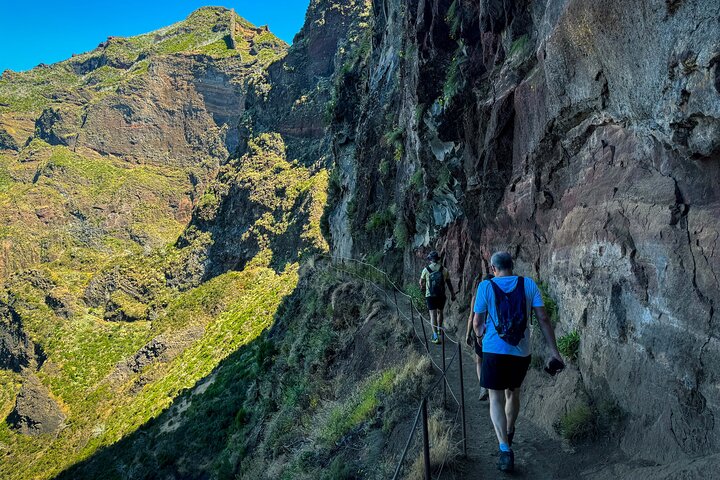
Madeira: Private 1.5-Kilometer Levada dos Balcões Hike PR11
Madeira's easiest levada walk, flat, paved, 1.5km each way through UNESCO laurel forest to a balcony viewpoint. Perfect for absolute beginners.
★ 4.86 (402 reviews) Book on Viator →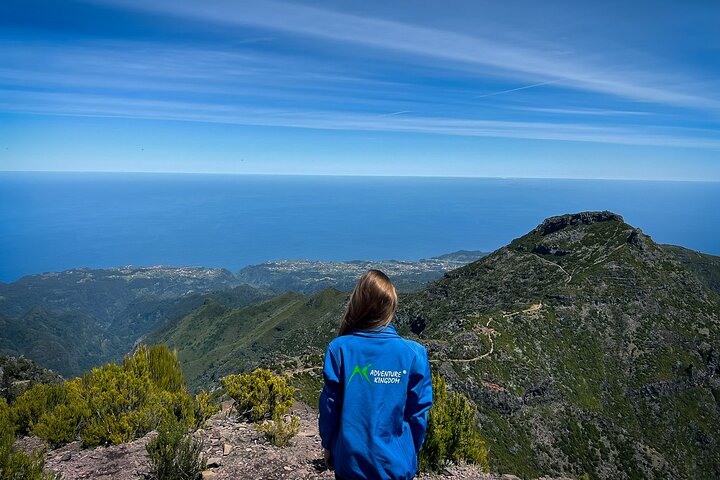
Madeira: Private 1.5-Kilometer Levada dos Balcões Hike PR11
Small-group guided tour to the top levada for the day's conditions. Hotel pickup from Funchal, guide chooses route based on weather and fitness. ~4 hours.
★ 4.88 (298 reviews) Book on Viator →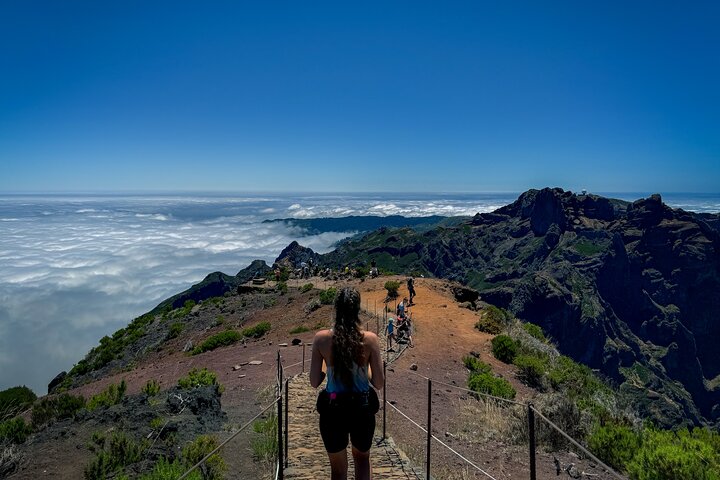
Levada do Alecrim Guided Walk
A quieter alternative to 25 Fontes from the same Rabaçal starting point. Shorter, flatter, and far fewer crowds with a waterfall reward at the end.
★ 4.7 (210 reviews) Book on Viator →Frequently Asked Questions
What is the easiest levada walk in Madeira for beginners?
Levada dos Balcões (PR11) is the easiest, 1.5km each way, ~30m elevation gain, paved path, no vertigo, and guardrails at the viewpoint. It's flat enough for toddlers and retirees in sandals.
Do I need a guide for Madeira hiking as a beginner?
No. The levada walks I recommend for beginners, Balcões, Alecrim, and the Funchal coastal path, are well-marked and require no guide. A guide is useful if you want to learn about the history or if you're nervous about navigation, but it's not necessary.
What should I pack for a beginner levada walk in Madeira?
Walking shoes with grip (not flip-flops), a waterproof jacket (microclimates change fast), 1L of water per person, sunscreen, a headlamp if you're doing any tunnel sections, and offline maps downloaded on your phone. Hiking poles are optional but helpful, buy them at Decathlon in Funchal for €12.99 instead of €35 at trailhead shops.
Is 25 Fontes suitable for beginners?
25 Fontes (PR6) is 4.6km each way with ~300m elevation gain, doable for a beginner with moderate fitness, but it's long and very crowded (200+ people on busy days). Start before 9 AM or skip it for the easier Levada do Alecrim from the same starting point.
What time of year is top for Madeira hiking for beginners?
Spring (March-May) and autumn (September-October) are ideal, comfortable temperatures, fewer crowds, reliable trail conditions. Summer (June-August) is busier and coastal trails like PR8 can be hot. Winter (November-February) brings rain on north-facing slopes and possible snow above 1,800m on Pico Ruivo.
Can I do Madeira hiking without a car?
Yes, but it's limiting. SAM bus routes reach some trailheads, route 103 to Balcões, route 113 to PR8, route 110 to Rabaçal, but they run infrequently (3-6 buses per day) and don't start before 8 AM. A rental car is strongly recommended for flexibility. If you don't want to drive, book a guided tour that includes transfers.