Ponta de São Lourenço (PR8) Hiking Guide: The Coastal Trail With No Shade
All PR hiking trails in Madeira now require advance booking through the SIMplifica system. Fees are €10.50 for PR1 (Vereda do Areeiro) and €4.50 for other PR trails. Hiking without a valid reservation risks fines. Book at simplifica.ifcn.madeira.gov.pt
I Didn’t Expect Madeira to Feel Like This
I’ll never forget my first August on Ponta de São Lourenço. I’d spent the previous week hiking through laurel forests on the north coast, where the air is cool and damp and everything smells like wet earth. I assumed Madeira’s hiking was all like that, misty, green, forgiving. PR8 (Ponta de São Lourenço) disabused me of that notion in under an hour.
We started at 10 AM, my first mistake. By 11 AM, the basalt rock was radiating heat like a pizza stone, there was zero shade, and the trail felt twice as long as its 3km each way. My group was dehydrated, cranky, and taking shelter behind the only rock big enough to cast a shadow. I called it, turned us around, and drove 15 minutes west to the coastal path at Prainha, a flat 2km walk along the volcanic cliffs with sea breeze and actual shade from the cliff overhangs. We saw a monk seal from the viewpoint and ate sandwiches on a bench overlooking the ocean. The lesson: PR8 is a sunrise or late-afternoon hike only in summer. The coastal alternatives are just as beautiful and way less punishing.
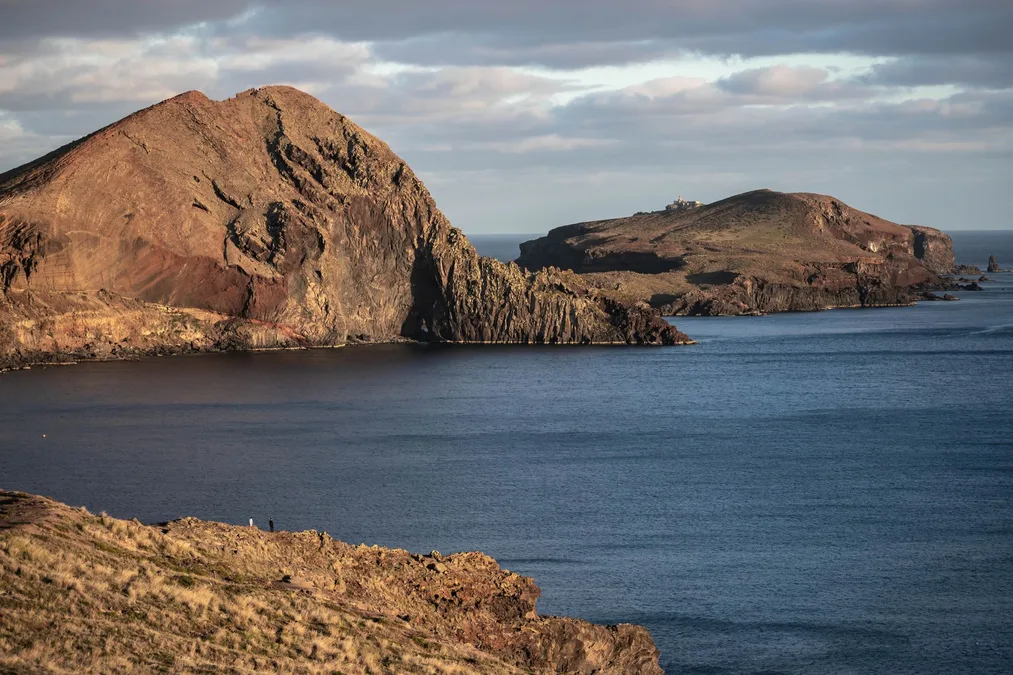
PR8 is the most exposed hike on the island. It’s 3km each way with ~300m of elevation gain, but the real challenge isn’t the climb, it’s the heat. There is no shade. There are no water sources. The basalt absorbs sunlight and radiates it back at you from every direction. I’ve seen people turn back at the 1km mark because they brought a 500ml bottle for a 6km round trip. Bring minimum 1.5L per person, and that’s a conservative number for a hot day.
We earn a commission when you book through our links on Viator (PID P00303273), at no extra cost to you.
We earn a commission when you book through our links on Viator, at no extra cost to you. This is how we keep the site free.
The trailhead is at Sardinha (GPS: 32°44'01.8"N 16°44'47.5"W), about a 25-minute drive east from Funchal. Parking costs €3/day in summer and holds about 50 spaces. If you’re relying on public transport, SAM bus route 113 stops at the Sardinha turn-off with six buses per day, but none run before 8 AM, which is too late for a comfortable summer start. Rent a car. I booked the Madeira East Jeep Safari on a return trip, and the guide drove us straight to the top viewpoints without the parking headache.
Madeira East Jeep Safari, The Tour That Saved My Trip
After my first PR8 failure, I was hesitant to go back. The heat had rattled me. So on my second trip, I let someone else handle the logistics. The Madeira East Jeep Safari covers Pico do Arieiro (weather permitting), Santana’s thatched houses, Ponta de São Lourenço viewpoint, and the eastern valleys most tourists never see. The guide knew exactly where to stop for shade breaks and had cold water in the jeep. Lunch at a quinta (farm) was included, fresh bread, local cheese, and a view over the terraced slopes where Madeirans actually grow their produce. It’s less dramatic scenery than the west tour but more culturally interesting. Top for second-time visitors who’ve already done the west coast.
Madeira East Jeep Safari
Covers Pico do Arieiro, Santana’s thatched houses, and Ponta de São Lourenço viewpoint. Less dramatic scenery than the west tour but more culturally interesting, you’ll see how Madeirans actually live in the agricultural terraces. Lunch at a quinta included. Top for culture-focused travelers or second-time visitors.
Check Availability →The Moments That Made hiking in Madeira Memorable
I’ve walked over 400km of levadas and summit trails on this island, and the moments that stick aren’t the Instagram viewpoints, they’re the unexpected encounters. Like meeting Sr. António on the PR9 trail near Ribeiro Frio. He was in his sixties, knee-deep in a channel, clearing silt with a metal rake while his dog slept on the path. I stopped to ask about the trail ahead, and he spent 20 minutes explaining how the 15th-century levada system actually works, that water rights are still allocated by the same “rodízio” (rotation) system the original settlers designed, where each farmer gets the flow for a set number of hours per week. He pointed to moss patterns on the channel walls to show where the water level should be. He didn’t speak English. My Portuguese was terrible. But we communicated through gestures and the universal language of point-at-thing-and-nod. I think about Sr. António every time I walk a levada.
Then there’s the microclimate shock. I started PR1 on a cloudless morning in April, t-shirt weather at the Arieiro carpark, sunglasses on, feeling smug about my timing. By the time I reached the tunnel at the 2km mark, the temperature had dropped 12°C and I was walking through freezing fog so dense I couldn’t see the next trail marker. The microclimate shift happens at the ridge between Arieiro and Ruivo, the north coast weather spills over like a lid coming off a pot. I finished the hike shivering in a thin rain jacket I’d almost left in the car. Now I carry a proper thermal layer on PR1 every single time, even when Funchal is 28°C.
And the poncha. It was 5:15 AM in Câmara de Lobos and I was looking for a pre-dawn coffee before a PR1 drive. The only light on the fishing harbor came from a tiny bar called Bar do Teresinha, door open, fishermen already drinking. I walked in expecting stares, and the owner just nodded, poured two fingers of poncha, and slid it across the counter without a word. I learned that morning that real fisherman’s poncha isn’t a tourist drink, it’s a breakfast replacement when you’ve been at sea since midnight. 30% ABV, fresh lemon, raw honey, and a story in every drop. I didn’t hike until 10 AM that day.
Levada Walk Madeira, A Under-the-radar spot Worth Discovering
If you’re new to Madeira and don’t want to research which levada to pick, the Levada Walk Madeira tour is a solid all-rounder. The guide chooses the route based on conditions and group fitness, usually one of the Rabaçal levadas or a north coast option. It’s good if you want someone else to handle the decisions. Less good if you have your heart set on a specific trail. I’ve taken it twice with visiting friends, and both times the guide adapted well: once to 25 Fontes on a dry day, once to Alecrim when rain threatened. The downside is you don’t get to choose, so if you’ve already done a particular levada, you might end up repeating it.
Levada Walk Madeira
A solid all-rounder levada experience. The guide chooses the route based on conditions and group fitness, usually one of the Rabaçal levadas or a north coast option. Good if you don’t want to research which levada to pick. Less good if you want a specific trail, you don’t get to choose. Top for first-time visitors who want someone else to handle the decisions.
Check Availability →What Really Surprised Me About Madeira
I thought I understood Madeira’s weather before I moved here. I didn’t. The island has 1,300+ miles of levadas, irrigation channels turned walking trails, and each one exists in its own microclimate. The north coast gets four times the rainfall of the south. The central mountain peaks can have snow in June. And coastal trails like PR8 are a completely different beast from the levada walks in the interior.
The Fanal Forest taught me this the hard way. I’d read the blogs, “remarkable,” “like a fairy tale”, and I wanted the famous photo of the gnarled laurel trees in mist. What I got was fog so thick I couldn’t see my boots. The parking lot markers disappeared after 15m. I followed what I thought was the trail for 20 minutes before realizing I was walking in a circle, my own footprints confirmed it. No phone signal, no trail markers visible, just grey and silence. I stood still, listened for the road, and followed the sound of an occasional car engine. It took 45 minutes to get back. Don’t walk Fanal forest in thick fog without GPS, the forest floor all looks identical and the trail markings are on trees you can’t see.
Another surprise: how quickly levadas can become dangerous. Levada do Alecrim in November. The IPMA forecast said “light rain.” What I got was a 30-minute downpour that turned a gentle levada-side trail into a fast-flowing gully. The channel, normally 30cm deep, was overflowing by 15cm across the path surface. I was ankle-deep in runoff, walking on the uphill edge of the trail because the downhill side dropped into a ravine I couldn’t even see through the rain. The water level in the levada itself rose 25cm in 20 minutes, I watched it happen. I turned back, soaked and cold, and the trail was officially closed by IFCN the next morning due to a landslide 500m from the parking area. The lesson: IPMA’s “light rain” forecasts for the north coast can mean anything. If you’re on a levada walk and the water starts lapping at the path edge, turn around immediately. It only gets worse.
And then there’s the social side of hiking here. The Instagram version of sunrise at Pico do Arieiro shows a lone hiker silhouetted against a burning orange sky, alone with the clouds. The reality: I arrived at 6:15 AM in July and found 200 people lined along the viewing platform, tripods everywhere, someone playing music from a Bluetooth speaker, and a queue for the famous shot at the stone archway. The sunrise itself was dramatic, I’ll never deny that, but the experience was closer to a concert crowd than a wilderness moment. If you want solitude, go on a weekday in November, arrive at 5:30 AM to get ahead of the crowd, or hike 15 minutes past the viewpoint toward Ruivo where the crowd thins to 5% of what’s at the summit. And yes, bring earplugs if Bluetooth speakers annoy you.
Sofia Almeida’s Insider Tips for Getting It Right
After 400km of walking, I’ve learned what works and what doesn’t. Here’s the short version:
- Start levada walks before 9 AM, especially 25 Fontes and PR1. The crowds arrive between 10 AM and noon. I’ve had the entire Levada dos Balcões to myself at 8:30 AM on a Tuesday.
- The Rabaçal parking fills by 9 AM, take the shuttle from the upper lot on the ER110. The lower lot at the forestry house holds ~80 cars, and they’re gone by 9:15 AM on summer weekends. The upper lot rarely fills before 10 AM. Look for the yellow “Parque” sign.
- Poncha bars in Câmara de Lobos are the real deal, order a “pescador” (fisherman’s poncha) for the strongest version. Bar do Teresinha opens at 5 AM. You’ll be drinking with the fishermen who’ve been at sea since midnight.
- The bakery in Santana next to the thatched houses does the top bolo do caco (sweet potato bread) on the island. Grab one with garlic butter before a north coast hike.
- If PR1 parking at Pico do Arieiro is full, park at the radar station 500m before and walk up. Adds 10 minutes to your start but saves the stress of circling.
- Most levada walks are out-and-back, the one-way distance on signs is to the endpoint only. Double it for round trip. I’ve seen too many people think “2km” means a quick stroll and end up exhausted.
- Buy cheap hiking poles at Decathlon in Funchal (Madeira Shopping mall, floor 2). Basic pair runs €12-18, a fraction of what tourist shops charge near trailheads. The PR1 summit kiosk sells the same poles for €35.
- Padaria do Monte opens at 5 AM. Grab a fresh bolo do caco with garlic butter before your sunrise hike. It’s on your way to Arieiro if you’re staying in Funchal.
- Café do Parque at the Rabaçal forestry house has reliable WiFi (surprisingly fast for a mountain station at 900m elevation). Good for last-minute route checks.
- BP station at the ER103 junction just before Pico do Arieiro turning has the top coffee on the mountain road, proper espresso machine, not vending machine instant. Open from 6 AM.
- There’s a free public water refill station at the Paul da Serra picnic area (ER110, near the Rabaçal turn-off). Fill up before descending into the levada walks.
What I Wish I’d Known Before I Went
I’ve made every mistake on this list so you don’t have to. Here’s what I’d tell my past self:
- Underestimate the microclimates at your own risk. Showing up at a north coast trailhead in shorts when it’s 8°C and raining is a rite of passage for new hikers. I did it on PR9 and spent the first hour shivering in a t-shirt. Check the IPMA forecast for the specific elevation of your trail, not just Funchal.
- “Levada walk” does not mean flat. PR1 and PR9 both follow levadas but have serious elevation. PR1 gains 800m over 6km. PR9 has multiple staircase sections. If you want flat, stick to Levada dos Balcões (PR11) or the coastal promenades.
- Check IFCN trail status the morning of your hike. Call or check visitmadeira.com/en/see-and-do/activities/nature/hiking. I drove 45 minutes to Pico do Arieiro at 5:30 AM with a friend visiting from Lisbon, only to find the entrance blocked by an IFCN barrier and a laminated sign: “PR1 CLOSED, MAINTENANCE.” We sat in the car, defeated, scrolling for alternatives. The backup plan became PR1.2 from Achada do Teixeira, only 3km each way, 270m gain, and the same Pico Ruivo summit waiting at the end. It wasn’t the full traverse, but we stood on Madeira’s highest point watching the sunrise with about 20 other people who’d had the same idea. The clouds were below us. The silence was complete. My friend said it was actually better because we could sit at the summit for an hour instead of rushing through the staircase section on a schedule. Now I always scout PR1.2 as the official backup plan.
- Don’t book a 6 AM whale watching tour from Funchal if you’re staying in Calheta. That’s an hour’s drive. I’ve seen people miss their tours because they didn’t account for Madeira’s winding roads. The early season (March to May) has the calmest sea conditions, the trade winds haven’t picked up yet. I boarded a catamaran in Funchal for a March trip, took seasickness tablets, and braced for misery. The Atlantic was like glass. We saw a pod of spotted dolphins within 15 minutes, then a sperm whale surfacing 200m off the starboard side. Nobody got sick. Not one person. Now that’s the only window I recommend for nervous first-timers.
- Driving to Pico do Arieiro for sunrise without checking the weather? You might be inside a cloud. I’ve done it. The sunrise was invisible. Check the Arieiro webcam before you leave.
- Wearing flip-flops on a levada walk because “it’s just a flat path” is a mistake you only make once. Levadas are wet, muddy, and slippery. The path edges are often only 30-50cm wide with a drop into the valley. I’ve seen people slip and end up ankle-deep in the channel. Wear proper hiking shoes with good grip.
- Rent a car with at least a 1.2L petrol engine. The PR1 access road has 40+ hairpin turns with 20% gradients. A Fiat 500 will struggle, and the undercarriage will scrape on every speed bump. Europcar and Guerin allow their standard fleet on Madeira’s mountain roads. Goldcar and Sixt explicitly forbid driving on ER101 and ER110 in their small-print, always check the “geographical restrictions” clause.
- Download offline maps before leaving Funchal. Madeira’s 150+ road tunnels kill GPS signal completely. Google Maps will spin helplessly between Funchal and Santana. Download Offline Maps in Google Maps or use Komoot/AllTrails offline before you leave your accommodation.
- Not all levadas have railings. Levada do Risco and parts of PR9 follow irrigation channels with a 30-50cm path edge and a 20m+ drop into the valley below. There is no fence. Even “easy” levada walks like parts of 25 Fontes have exposed sections. If vertigo is an issue, stick to Levada dos Balcões or the coastal promenades.
- Book sunrise transfers 3+ days in advance during peak season (May-September). I’ve had groups of 6 unable to find a single available slot for the entire week. The Viator operators running PR1 sunrise transfers only take 8-12 people per van, and they sell out consistently. Book Sunday for Thursday or you’re driving yourself at 4 AM.
PR8 (Ponta de São Lourenço) remains one of my favorite hikes on the island, but only when I do it right. Start before 8 AM in summer, bring 2L of water per person, wear a hat, and accept that you’re going to be exposed to the sun for the entire 6km round trip. The views of the volcanic coastline, the turquoise water, and the distant Desertas Islands are worth it. Just don’t make the same mistakes I did.
Explore More
Related comparisons and guides:
Frequently Asked Questions
How long is the PR8 Ponta de São Lourenço hike?
PR8 is 3km each way (6km round trip) with approximately 300m of elevation gain. Most people take 2-3 hours round trip, depending on pace and how many photo stops you make. The trail is out-and-back, the one-way distance on the sign is to the endpoint only, so double it for total distance.
Is PR8 suitable for beginners?
Yes, the trail is well-maintained and the elevation gain is moderate, but the lack of shade and intense sun exposure make it challenging for beginners in summer. It’s not suitable for anyone who can’t handle 2-3 hours of direct sun without shade breaks. Start before 8 AM or after 4 PM in summer, and bring at least 1.5L of water per person. If you have young children or heat sensitivity, choose a coastal alternative like the Prainha path instead.
Do I need a guide for the PR8 hike?
No, the trail is well-marked and easy to follow on your own. The GPS coordinates for the trailhead are 32°44'01.8"N 16°44'47.5"W. However, if you want to combine PR8 with other eastern Madeira attractions without dealing with parking and logistics, the Madeira East Jeep Safari covers the viewpoint plus Santana and Pico do Arieiro.
What should I bring for the PR8 hike?
Minimum 1.5L of water per person (2L on hot days), a hat, sunglasses, sunscreen, sturdy hiking shoes with good grip, and a windbreaker, the wind at the tip of the peninsula can be strong. There are no water sources on the trail. The nearest public water refill station is at the Paul da Serra picnic area on the ER110. Mobile coverage is good on the entire trail (line-of-sight to Funchal antennas), but download offline maps anyway.
Is the PR8 hike dangerous?
The trail itself is not technically dangerous, it’s a well-maintained path with no vertigo exposure or narrow ledges. The danger comes from the heat and sun exposure. Heat exhaustion is a real risk in summer if you start late or don’t bring enough water. The nearest medical post is Centro de Saúde do Caniço (8km, 15 min drive), open 8 AM-8 PM weekdays. Always check IFCN trail status before heading out, check the official trail status page or check visitmadeira.com/en/see-and-do/activities/nature/hiking.
Can I combine PR8 with other hikes in eastern Madeira?
Yes, but don’t try to do PR8 and a mountain hike on the same day, the driving time between them is significant. A good itinerary is: morning at PR8 (start before 8 AM in summer), followed by a relaxed afternoon exploring Santana's thatched houses and the eastern valleys. Save Pico do Arieiro or the levada walks for a different day, you'll enjoy both more with proper time and energy.