Pico do Arieiro Sunrise: Transfer vs Self-Drive
The Instagram version of sunrise at Pico do Arieiro shows a lone hiker silhouetted against a burning orange sky, alone with the clouds. The reality: I arrived at 6:15 AM in July and found 200 people lined along the viewing platform, tripods everywhere, someone playing music from a Bluetooth speaker, and a queue for the famous shot at the stone archway. The sunrise itself was impressive, I'll never deny that, but the experience was closer to a concert crowd than a wilderness moment.
After walking 400+ km of Madeira trails, I've done the Arieiro sunrise in every season. Here's the honest breakdown: if you want solitude, go on a weekday in November, arrive at 5:30 AM to get ahead of the crowd, or hike 15 minutes past the viewpoint toward Ruivo where the crowd thins to 5%. If you want the classic experience without the logistical headache (parking fills by 6:30 AM, car ends up 30km from where the hike finishes), book the sunrise transfer.
Standing at 1,818 metres above the Atlantic, watching the sun rise above the clouds from Pico do Arieiro is Madeira's most famous outdoor experience. But getting there at 6:30 AM in the dark, on winding mountain roads, requires planning. Here is how to do it right.
We earn a commission when you book through our links on Viator (PID P00303273), at no extra cost to you. This is how we keep the site free.
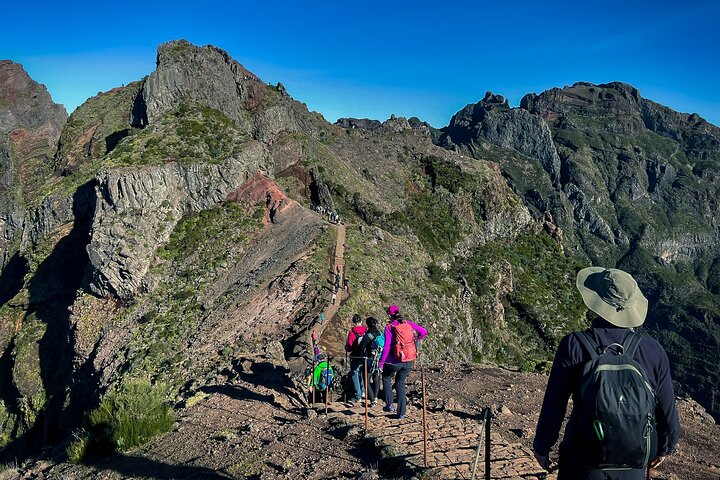
For most visitors, a sunrise transfer is worth the €35–50. You get hotel pickup in Funchal, do not have to navigate hairpin turns at 5:30 AM, and the transfer handles the one-way logistics: you hike from Pico do Arieiro to Pico Ruivo (6.1km, 4–6 hrs) and get picked up at Achada do Teixeira rather than retracing your steps. Self-drive saves money but creates a one-way problem: your car is 30km away by road from where the hike ends.
Local Wisdom, The Sunrise That Almost Did Not Happen
🇵🇹 Before You Hike (2026 Update)
SIMplifica booking is now mandatory for all classified PR trails in Madeira. You must book online before arrival and show a QR code at the trail entry.
- Standard trails: €4.50 per person
- PR1 (Pico do Arieiro → Pico Ruivo): €10.50 per person (from April 2026)
- Book at: simplifica.madeira.gov.pt
Check trail status before you go: IFCN official trail status · IPMA weather
📌 PR1 spent part of early 2026 partially closed for rockfall repairs. It has since reopened. Always verify current status with IFCN, conditions change. Guided tours that include your trail fee are a convenient option, see recommended tours below ↓
December, 4:30 AM. I drove up to Pico do Arieiro in darkness, the road winding through the clouds. At the summit: fog. Complete whiteout. A dozen other hikers stood at the viewpoint, phones out, photographing grey nothing. A Spanish couple packed up and left. I almost joined them. Then, at 7:12 AM, 90 seconds, the cloud layer dropped 100m and the sunrise burst through underneath. The clouds became a golden floor. The mountains rose above them like islands in a burning sea. The Spanish couple were already halfway down. They missed it. Madeira summits reward patience. Give any summit sunrise at least 30 minutes past the official time before you give up. Also: the car park at Arieiro fills by 6 AM in summer. Arrive by 5:30 or book a transfer. And bring a thermos of coffee, the café opens at 8 AM. You will want something warm before then.
Transfer vs Self-Drive Comparison.
| Sunrise Transfer | Self-Drive | |
|---|---|---|
| Price | €35–50/person | ~€10 fuel + parking |
| Pickup | Hotel pickup 5:30 AM | Drive yourself, 35-40 min from Funchal |
| Route | One-way: Arieiro → Ruivo, pickup at Teixeira | Must get back to car (second car or taxi ~€40-50) |
| Top For | Hassle-free sunrise, no logistics stress | Budget travellers, flexible schedules |
| Pros | No backtracking, no driving in the dark, sells out daily | Flexible timing, cheaper |
| Cons | Fixed schedule, must book ahead | Logistics headache (one-way hike), car park fills by 6:30 AM |
What to Bring for the Sunrise Hike
I made the mistake of wearing cotton socks on my first winter Arieiro sunrise. The temperature at 1,818m can drop to 5°C even in summer, and wind chill makes it feel closer to freezing before the sun crests the horizon. Merino wool base layers, a windproof jacket, and proper hiking boots are non-negotiable. The trail from Arieiro to Ruivo has loose volcanic scree sections that are treacherous in trainers, I've seen three twisted ankles on that descent, all in fashion sneakers.
A headlamp is essential because you start the trail before daylight. The path is well-marked (PR1 has yellow-and-red markers) but the first 500m through the tunnel section has no natural light at all. Carry at least 1.5 litres of water, there are no refill points on the ridge. The sun hits the south-facing slopes hard from 9 AM onwards, and the exposed sections between Arieiro and the Ninho da Manhã viewpoint have zero shade. A thermos of coffee or tea makes the wait for sunrise infinitely better.
Top Time of Year for the Sunrise
July and August offer the highest probability of clear skies, around 70% of mornings are cloud-free at sunrise, but the viewing platform can have 200+ people. I've counted 47 tripods on the platform in August. September and October maintain good weather with noticeably fewer crowds. November through February has the lowest tourist numbers but only about 40% clear-sky probability at dawn. The trade-off is worth it: I did a January sunrise with 12 other people on the platform, and the cloud inversion that morning created a sea of fog below the peak that lasted until 9 AM.
Spring (March to May) is my personal sweet spot: crowds are moderate, wildflowers are blooming on the lower sections of PR1, and the sunrise time shifts from 7:30 AM in March to 6:45 AM by May, making the early start slightly more civilised. Check the IPMA forecast specifically for Pico do Arieiro summit, not Funchal, the weather at sea level has no relationship to conditions at 1,818m. Webcams at the summit are available through the IFCN Madeira website the morning of your hike.
Who This Sunrise Is NOT For
I need to be honest: this hike at sunrise is genuinely challenging, and not everyone will enjoy it. The first time I guided a friend up here, she was underdressed in a cotton hoodie and running shoes, shivering within 10 minutes of arriving at the summit. She spent the whole sunrise staring at her feet instead of the view. If you're not someone who handles cold well, or if the idea of a 5 AM pickup sounds miserable, book the regular daytime tour instead. The afternoon light on the ridge is also impressive, you just see it in reverse.
Also, the exposed ridge section between Pico do Arieiro and Ninho da Manhã can be terrifying if you're afraid of heights. The path narrows to about a metre in places, with drops of several hundred metres on either side. There are guardrails on the most exposed sections, but not everywhere. I watched a hiker freeze mid-step on that section; her partner had to guide her backward to safety. If vertigo is an issue for you, consider the Levada das 25 Fontes or Levada do Risco for equally dramatic scenery without the exposure.
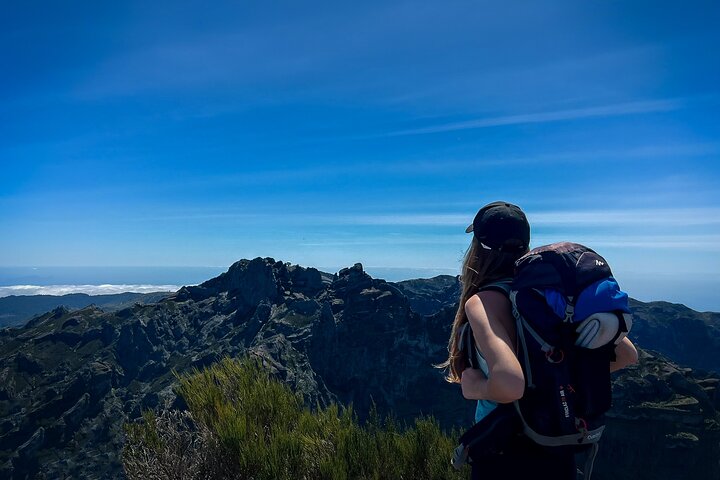
Who it's NOT for: Anyone afraid of heights or exposed ridges, people who can't handle early mornings, hikers without proper cold-weather gear, families with very young children (the ridge is too exposed for toddlers), and anyone prone to altitude-related headaches (1,818m is not high enough for altitude sickness but the rapid ascent from sea level can cause mild symptoms). Also not ideal if you want a quiet, contemplative experience, the summit platform can be crowded, and the sunrise moment is often accompanied by applause and chatter.
Frequently Asked Questions
What I Wish Someone Had Told Me Before My First Sunrise Hike
I made three mistakes on my first PR1 sunrise attempt. First, I wore a cotton t-shirt under a light jacket. At 1,800m in January, with wind chill, that was laughably inadequate. I spent the first 30 minutes on the summit platform shivering so hard I couldn't hold my phone steady for photos. Second, I didn't check the trail conditions at the summit, I only checked the Funchal forecast, which said 18°C and sunny. At the Arieiro summit, it was 4°C with 40km/h winds. The difference between sea level and the peak is not subtle. Third, I assumed the tunnels were illuminated. They are not. One of them has uneven, wet ground. Without a headlamp, you're either using your phone (draining battery you'll need for photos) or navigating by touch.
Who this sunrise is NOT for: Anyone who can't handle cold (the summit is always cold at sunrise, even in August), people with vertigo (the exposed ridge section is unavoidable), families with young children (the trail is too dangerous for small kids in the dark), and anyone who values sleep over scenery. If you're not a morning person, do the same hike as a self-guided day trip, the views are the same, just with more people on the trail. The sunrise experience is special, but it's not worth it if you're miserable the whole time.
Can I drive myself to Pico do Arieiro for sunrise?
Yes, but there is a catch with the one-way logistics. The standard hike goes Arieiro → Ruivo (6.1km, 4–6 hours), ending at Achada do Teixeira, which is 30km by road from where you parked. Options include booking a taxi from Teixeira back to Arieiro (~€40–50), or arranging a two-car system with someone in your group. Walking back the same way is not an option, because PR1 has been one-way since it reopened on 1 May 2026. The sunrise transfer solves this neatly: it picks you up at Teixeira and drives you back to Funchal or Caniço.
How early should I arrive for parking?
By 6 AM in summer, the car park is full. Arrive by 5:30 AM at the latest. In winter (November–February), 6 AM is usually sufficient but I've seen it fill by 6:15 on clear mornings. There is overflow parking on the road verge below the main car park, but it adds a 200m uphill walk in the dark.
Do I need a guide for the PR1 trail?
No, the trail is well-marked and maintained. The main reason to book a sunrise transfer is logistics: it drops you at Arieiro and picks you up at Achada do Teixeira. The trail itself is straightforward on a clear day. In fog, however, the markers can be harder to spot on the exposed ridge section between Arieiro and Ninho da Manhã. If you have no mountain experience, a guide adds safety and context about the geology and flora along the ridge.
Explore More
Related comparisons and guides:
- Family-Friendly Hiking in Madeira, Safe, Easy Trails for Kids
- First Time Hiking in Madeira, Essential Tips for Beginners
- Top Madeira Hikes for Photographers, Capturing the Island's Landscapes
- PR1 vs PR1.2: Which Pico Ruivo Route is Right for You?
- Sunrise Transfer to Pico do Arieiro Hike vs West Tour Fanal Forest Porto Moniz